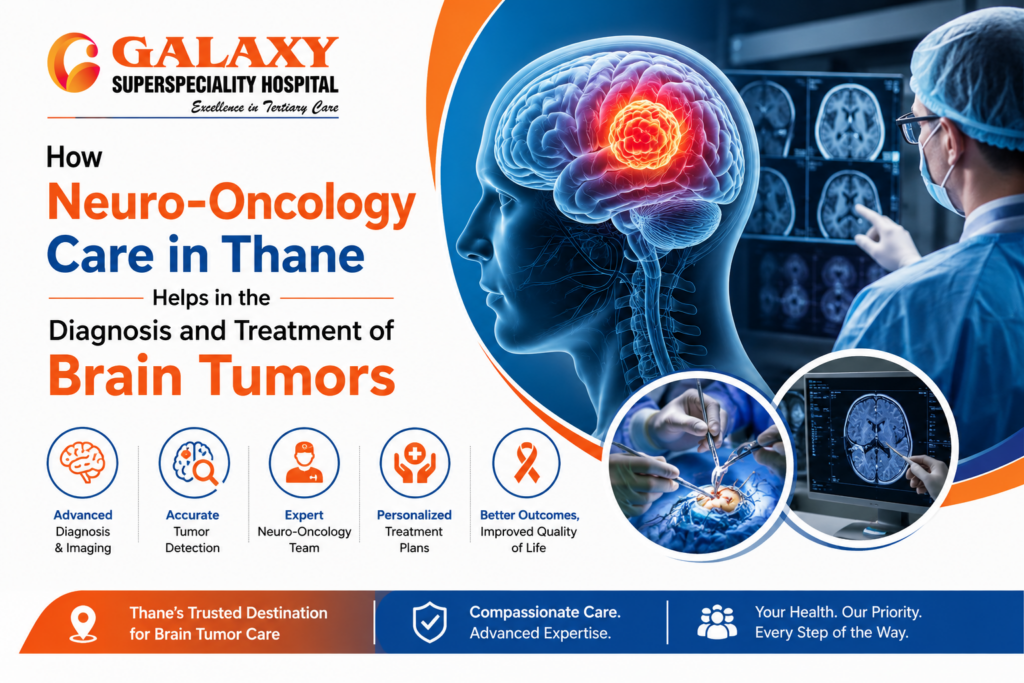
A brain tumor diagnosis can raise many questions about treatment, recovery, and the next steps. Because tumors can develop in different areas of the brain and behave differently, doctors tailor treatment to each patient’s condition. Dr. Nilesh Potdar evaluates the tumor’s characteristics and the patient’s individual needs before suggesting suitable treatment options. Therefore, Neuro-Oncology Care in Thane can help patients receive specialized support from diagnosis and treatment planning through follow-up care.
Understanding Neuro-Oncology Care
Neuro-oncology deals with tumors affecting the brain, spinal cord, and other parts of the nervous system. Neuro-Oncology Care in Thane may involve neurological assessment, imaging, treatment planning, surgical care, and continued monitoring.
The recommended approach can differ based on whether the tumor is benign or malignant, its location, size, grade, and how it affects surrounding brain structures.
How Are Brain Tumors Diagnosed?
Finding the exact nature and location of a tumor is an important part of treatment planning. A specialist may recommend different investigations depending on the patient’s symptoms and examination.
These can include:
- Neurological evaluation
- MRI or CT scans
- Contrast-enhanced imaging
- Biopsy when necessary
- Pathological examination
- Molecular testing for selected tumors
Neuro-Oncology Care in Mulund can help patients undergo specialist assessment when further evaluation or treatment planning is required.
Brain Tumor Treatment Options
There is no single treatment that is suitable for every brain tumor. Neuro-Oncology Care in Thane focuses on selecting an approach according to the patient’s diagnosis, tumor characteristics, and overall health.
Surgical Treatment
When appropriate, surgery may be recommended to remove the tumor or obtain tissue for diagnosis. The surgical plan depends on the tumor’s location and its proximity to important areas of the brain.
Radiation Therapy
Radiation may be advised for certain tumors either after surgery or as part of the main treatment. The decision depends on the type and stage of the tumor.
Medical Treatment
Some brain tumors may require chemotherapy, targeted medicines, or other forms of medical treatment. These options are selected according to the tumor’s specific characteristics.
Why Individualized Treatment Matters
Brain tumors can differ considerably from one patient to another. Neuro-Oncology Care in Mulund takes several factors into consideration before treatment is recommended.
Important factors may include:
- Type and grade of the tumor
- Size and exact location
- Symptoms and neurological findings
- MRI or CT findings
- Biopsy and pathology results
- Previous treatments
- General health and medical history
Considering these factors can help create a treatment plan suited to the patient’s condition.
Role of Modern Neurosurgical Techniques
Advances in neurosurgery have introduced techniques that can assist surgeons in treating selected brain tumors with greater accuracy. Neuro-Oncology Care in Thane may include image-guided or minimally invasive approaches when they are clinically appropriate.
The choice of surgical technique depends on factors such as tumor accessibility, size, location, and its relationship with vital brain structures.
Importance of Follow-Up Care
Treatment is only one part of the brain tumor care journey. Regular follow-up helps specialists assess recovery and monitor the patient’s condition over time.
Neuro-Oncology Care in Mulund may include periodic consultations and imaging based on the individual’s diagnosis and previous treatment. The frequency of follow-up varies from patient to patient.
Benefits of Specialized Neuro-Oncology Care
Brain tumor management can involve several complex medical decisions. Neuro-Oncology Care in Thane provides a specialized approach that can bring together diagnosis, treatment planning, surgical management, and follow-up.
Patients can discuss their diagnosis, treatment choices, possible risks, and expected recovery with their specialist. Understanding these aspects can help them make informed decisions about their care.
Frequently Asked Questions
1. What does neuro-oncology care include?
It includes the evaluation, diagnosis, treatment planning, and follow-up of tumors affecting the brain, spinal cord, and nervous system.
2. How is a brain tumor diagnosed?
Doctors may use neurological examinations, MRI or CT scans, biopsy, pathology, and other tests depending on the suspected tumor.
3. Can all brain tumors be treated with surgery?
Not always. Surgery depends on the tumor’s type, location, size, and relationship with important brain structures. Other treatments may be considered when surgery is unsuitable.
4. What are the common treatments for brain tumors?
Depending on the diagnosis, treatment may include surgery, radiation therapy, chemotherapy, targeted medicines, or a combination of these approaches.
5. Is follow-up important after brain tumor treatment?
Yes. Follow-up appointments and recommended imaging can help specialists monitor recovery and assess the condition over time.
Final Thoughts
Brain tumor treatment requires careful diagnosis and a plan suited to the individual patient. Neuro-Oncology Care in Thane and Neuro-Oncology Care in Mulund can support patients through different stages of evaluation, treatment, and follow-up. Dr. Nilesh Potdar can assess the patient’s condition and recommend suitable treatment options based on the diagnosis and individual requirements.