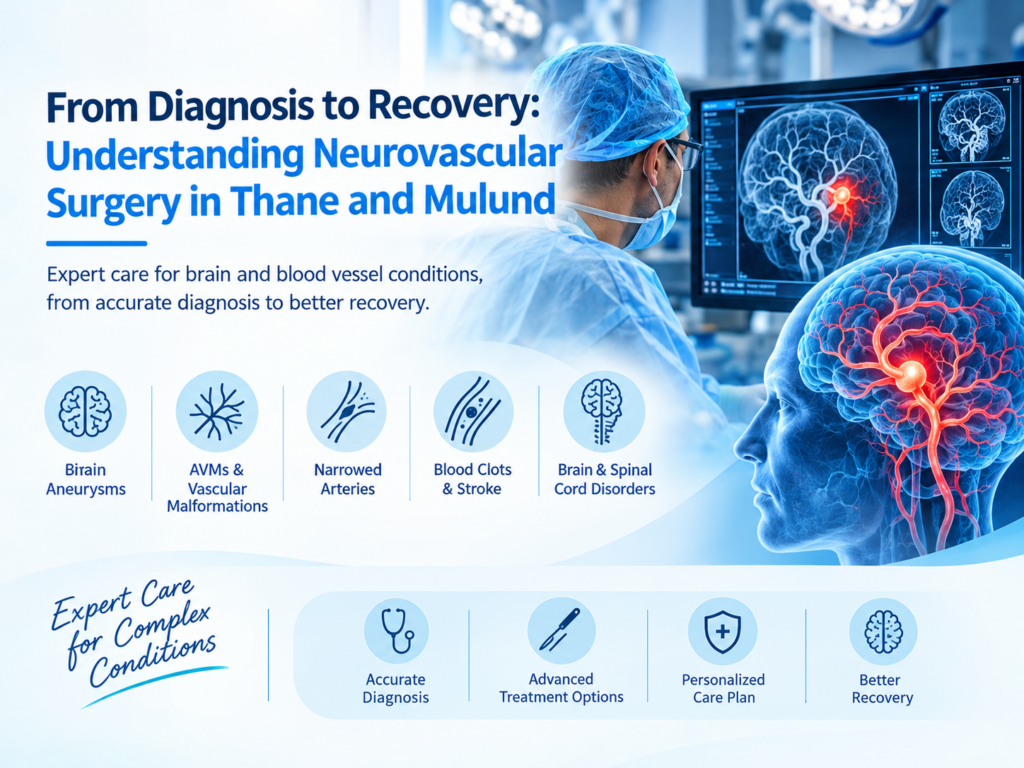
At Galaxy Superspeciality Hospital, Mulund, and Mercurrey Hospital, Thane, patients can receive specialized neurosurgical care from Dr. Nilesh Potdar, who provides treatment for complex neurovascular conditions. His service page on [Neurovascular Surgery in Thane] naturally explains the available treatment approaches, symptoms, and importance of follow-up care.
What Does Neurovascular Surgery Treat?
Neurovascular surgery is a specialized area of neurosurgery involving disorders of the blood vessels of the brain and spinal cord. These conditions can sometimes develop without obvious symptoms and may only become apparent after a neurological event or during diagnostic testing.
Common conditions may include brain aneurysms, AVMs, narrowed arteries, blood clots, and certain complications associated with stroke. Depending on the diagnosis, the treatment plan may involve observation, medication, minimally invasive procedures, or open surgery.
For patients searching for Neurovascular Surgery in Mulund, understanding the exact cause of the vascular problem is an important first step. A specialist may recommend imaging investigations such as CT scans, MRI, or cerebral angiography to understand the location and nature of the abnormality.
Why Early Evaluation Matters
Neurovascular conditions can affect blood flow to important areas of the brain. A ruptured aneurysm, for example, can cause bleeding around the brain, while an obstruction in a blood vessel may contribute to an ischemic stroke. Early evaluation can help doctors understand the potential risks and determine an appropriate treatment strategy.
People experiencing a sudden and severe headache, weakness or numbness on one side of the body, difficulty speaking, vision disturbances, seizures, or other sudden neurological symptoms should seek urgent medical attention. These symptoms can have several causes, so professional assessment is essential rather than relying on self-diagnosis.
For individuals considering Neurovascular Surgery in Thane, the treatment decision is generally based on the patient’s condition, medical history, imaging findings, and overall health.
Treatment Approaches for Neurovascular Conditions
The treatment used in Neurovascular Surgery in Mulund depends on the specific vascular disorder. Modern neurovascular care may include minimally invasive endovascular procedures as well as conventional surgical techniques.
Endovascular therapy uses a catheter introduced through a blood vessel to reach the affected area. Depending on the condition, techniques such as coiling, stenting, embolization, or thrombectomy may be considered. These procedures can be useful for selected aneurysms, vascular malformations, narrowed arteries, or blood clots.
In other situations, a craniotomy or another surgical procedure may be necessary. Surgical treatment provides direct access to the affected area and may be recommended when the characteristics of the condition make open surgery appropriate.
The goal of Neurovascular Surgery in Thane is not simply to perform a procedure but to select an approach that addresses the underlying vascular problem while considering the patient’s individual circumstances.
The Role of a Specialized Neurosurgeon
Choosing an experienced specialist is an important part of managing a complex vascular disorder. Dr. Nilesh Potdar has qualifications including MBBS, MS in General Surgery, and M.Ch. in Neurosurgery. His practice includes neurovascular conditions such as aneurysms and arteriovenous malformations.
Patients looking for Neurovascular Surgery in Mulund may also benefit from understanding how different neurological specialties can overlap. For example, patients with tumors involving the brain or spinal cord may require a separate multidisciplinary approach involving neurosurgery, oncology, radiation therapy, or other specialties. Information about related [neuro-oncology care in Thane] can help patients understand how specialized neurological treatment may differ according to the underlying diagnosis.
Recovery and Follow-Up Care
Recovery after Neurovascular Surgery in Thane varies depending on the condition, procedure, and overall health of the patient. Some individuals may require close neurological monitoring immediately after treatment, while others may need rehabilitation to improve strength, coordination, or daily functioning.
Follow-up appointments are also important. Doctors may monitor symptoms, review imaging studies, assess recovery, and recommend lifestyle measures that support long-term vascular health. Managing blood pressure, following prescribed medications, maintaining a balanced diet, exercising safely, and avoiding smoking can form part of an individualized recovery plan.
For patients undergoing Neurovascular Surgery in Mulund, following the treating specialist’s instructions and attending scheduled reviews can help the medical team monitor progress and address concerns promptly.
Frequently Asked Questions
1. What is neurovascular surgery?
Neurovascular surgery is a specialized branch of neurosurgery that focuses on conditions affecting blood vessels of the brain and spinal cord, including aneurysms, AVMs, and certain vascular disorders.
2. Who may need neurovascular surgery?
People diagnosed with conditions such as brain aneurysms, arteriovenous malformations, blocked or narrowed arteries, or selected stroke-related vascular problems may require specialist evaluation to determine whether surgery or another treatment is appropriate.
3. What tests are used to diagnose neurovascular conditions?
Depending on the suspected condition, doctors may recommend CT scans, MRI, cerebral angiography, or other vascular imaging tests to examine blood vessels and identify abnormalities.
4. Is neurovascular surgery always performed through open surgery?
No. Treatment can include medication, observation, endovascular procedures, or open surgery. The appropriate approach depends on the type, location, size, and characteristics of the vascular condition.
5. What symptoms require urgent neurological evaluation?
Sudden severe headache, weakness or numbness, difficulty speaking, sudden vision changes, seizures, or other abrupt neurological symptoms should receive urgent medical assessment because they can be associated with serious neurological conditions.