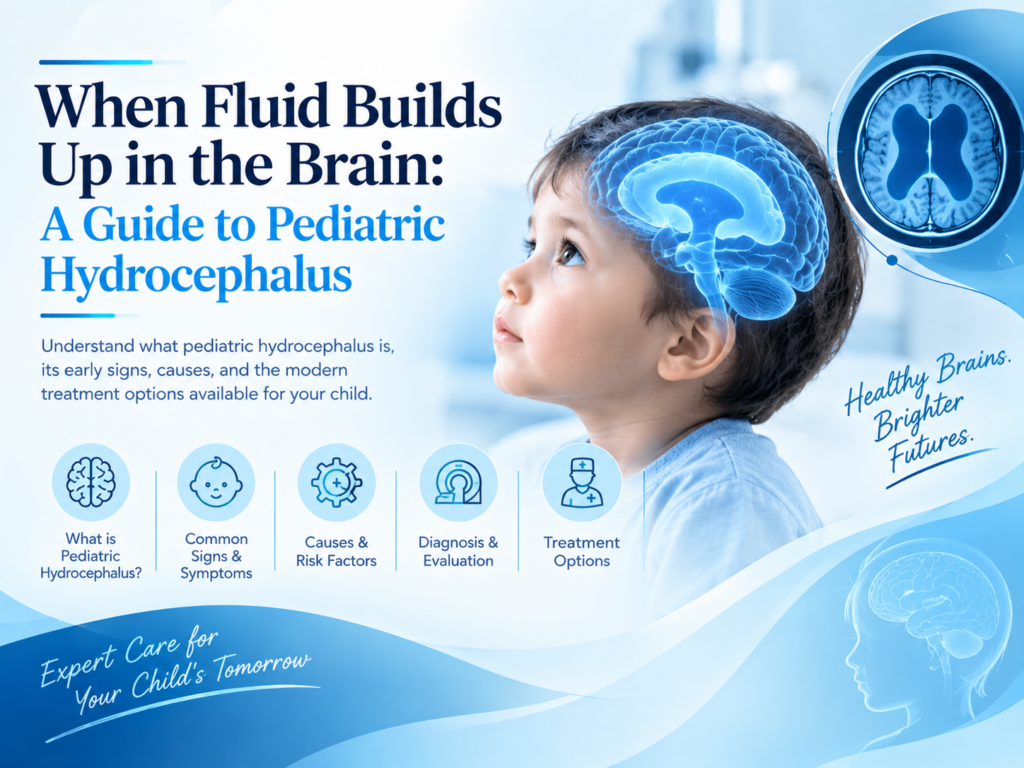
Hydrocephalus is a neurological condition in which excess cerebrospinal fluid (CSF) builds up within the brain’s ventricles. Because this fluid normally helps cushion and protect the brain, an abnormal accumulation can increase pressure and affect a child’s development and neurological health. Early recognition and appropriate treatment can play an important role in preventing complications.
This on-page blog for Pediatric Hydrocephalus Treatment in Thane explains what hydrocephalus means, why it can occur in children, which warning signs parents should know, and how treatment planning may vary according to the child’s condition.
What Is Pediatric Hydrocephalus?
Pediatric hydrocephalus occurs when the normal flow or absorption of cerebrospinal fluid is disrupted. As fluid accumulates, pressure inside the skull can increase. In infants and young children, this may sometimes be associated with noticeable changes in head growth or the soft spot on the top of the head.
The condition can develop before birth or later during childhood. Causes mentioned on the dedicated service page include congenital abnormalities, infections such as meningitis or encephalitis, bleeding in the brain, brain tumors, and head trauma.
For families researching Pediatric Hydrocephalus Treatment in Thane, understanding the possible cause is an important part of the diagnostic process because treatment needs to address the underlying problem as well as the fluid buildup.
Signs Parents Should Not Ignore
Symptoms can differ depending on the child’s age and the severity of the condition. In infants, parents may notice an unusually large or rapidly growing head, a swollen or bulging soft spot, poor feeding, vomiting, irritability, or increased sleepiness.
Older children may experience headaches, nausea, changes in behaviour, seizures, learning or developmental difficulties, or problems related to coordination and neurological function. The presence of one symptom does not necessarily mean that a child has hydrocephalus, but persistent or concerning changes should be evaluated by a qualified specialist.
Early assessment is particularly important because untreated pressure within the brain can potentially contribute to neurological and developmental complications.
What Causes Hydrocephalus in Children?
There is no single cause of pediatric hydrocephalus. Some children may be born with conditions that affect the development of the brain or pathways through which CSF flows. Spina bifida and certain developmental abnormalities may be associated with congenital hydrocephalus.
Infections affecting the brain can also interfere with normal CSF circulation. Premature infants may experience bleeding within the brain, which can damage the pathways responsible for fluid drainage. In other cases, a tumor or head injury may interfere with the normal movement of CSF.
This is why specialist evaluation is a must before deciding on treatment. The child’s symptoms, medical history, neurological findings, and relevant investigations all contribute to treatment planning.
How Is Pediatric Hydrocephalus Evaluated?
Evaluation generally begins with understanding the child’s symptoms and medical history. Doctors may assess head growth, neurological development, feeding patterns, behaviour, movement, and other clinical signs.
Depending on the child’s condition, imaging and other investigations may be required to understand the brain’s structure and identify the reason for CSF accumulation. The aim is to determine how serious the condition is and which treatment approach may be appropriate.
Children may also have other neurological conditions that require specialist assessment. For example, conditions affecting the developing spine can involve congenital abnormalities, spinal tumors, scoliosis, or other structural problems. These are discussed separately in the pediatric spinal disorder care, where treatment may include monitoring, physical therapy, bracing, or surgery depending on the condition.
Treatment and the Importance of Early Intervention
The appropriate treatment for hydrocephalus depends on the cause, severity, age of the child, and overall neurological condition. Some children may require surgical treatment to manage the excess CSF and reduce pressure, while the exact procedure is determined after specialist evaluation.
Treatment does not necessarily complete with the procedure. Follow-up care can be important for monitoring neurological development and identifying possible complications. The service information also highlights rehabilitation support such as physical therapy, occupational therapy, and regular check-ups following treatment.
For families looking for Pediatric Hydrocephalus Treatment in Mulund, treatment is provided under the care of Dr. Nilesh Potdar at Galaxy Super Speciality Hospital in Mulund, while Mercurrey Hospital in Thane is also listed as a treatment location.
Why Individualised Care Matters
Every child with hydrocephalus can have a different medical history and set of symptoms. A treatment plan therefore needs to be tailored rather than based on a standard approach. Dr. Nilesh Potdar provides specialised neurosurgical care for pediatric neurological conditions, with treatment planning focused on the individual needs of each child.
Families searching for Pediatric Hydrocephalus Treatment in Mulund can discuss the child’s symptoms, investigations, treatment possibilities, recovery expectations, and follow-up requirements during a specialist consultation.
Pediatric neurological problems can sometimes overlap with other conditions affecting the brain. For instance, brain tumors in children may interfere with normal CSF circulation and can require specialised diagnosis and treatment. Information about pediatric brain tumor treatment can help families understand why identifying the underlying cause is an important part of neurological care.
FAQs
1. What is pediatric hydrocephalus?
It is a condition in which excess cerebrospinal fluid accumulates in or around the brain, potentially increasing pressure and affecting neurological development.
2. What are common signs of hydrocephalus in babies?
Signs can include rapid head growth, a bulging soft spot, vomiting, poor feeding, irritability, and unusual sleepiness.
3. Can hydrocephalus occur because of a brain tumor?
Yes. A brain tumor can obstruct the normal flow of cerebrospinal fluid and contribute to fluid accumulation.
4. Is surgery always required for pediatric hydrocephalus?
Treatment depends on the child’s specific condition, cause, and severity. A specialist evaluation is necessary to determine the appropriate approach.
5. Is follow-up needed after hydrocephalus treatment?
Yes. Regular monitoring can help assess recovery, neurological development, and possible treatment-related complications.