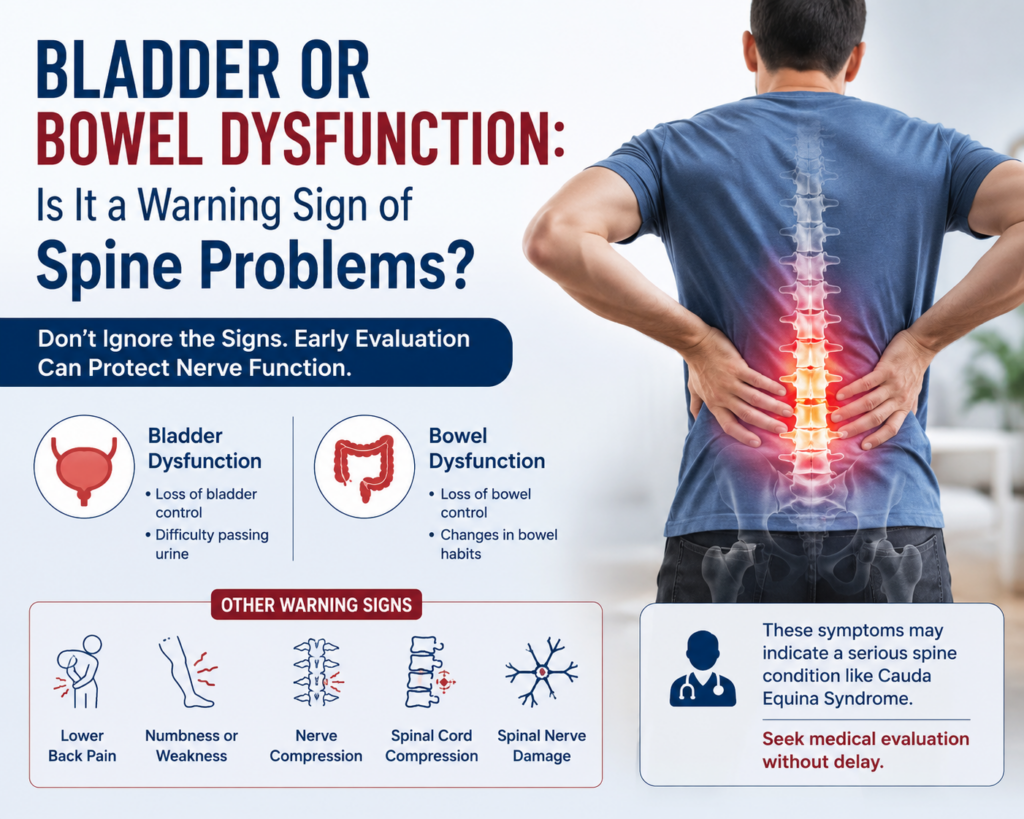
Bladder or bowel changes can sometimes be linked to problems affecting the nerves in the lower spine. While occasional urinary or digestive changes may have many causes, sudden changes along with back pain, numbness, or weakness should not be ignored. Understanding the connection between the spine and bladder or bowel function can help you recognise when medical evaluation may be important. Spine Problems Treatment in Thane may involve a detailed assessment to identify the underlying cause and determine the appropriate treatment approach.
How Can Spine Problems Affect Bladder or Bowel Function?
The lower spinal nerves play an important role in controlling the bladder, bowel, and muscles of the lower body. When these nerves become compressed or irritated, their normal function can be affected.
Nerve Compression in the lower spine may result from a herniated disc, spinal canal narrowing, injury, or other spinal conditions. In some cases, severe compression can interfere with the nerves responsible for bladder and bowel control.
Is Bladder or Bowel Dysfunction a Serious Warning Sign?
New or sudden changes in bladder or bowel function, particularly when combined with neurological symptoms, require prompt medical attention. These symptoms can sometimes be associated with Cauda Equina Syndrome, a condition involving significant compression of the nerves at the lower end of the spinal canal.
Warning signs may include:
- Loss of Bladder Control or difficulty controlling urination
- Loss of Bowel Control or unexpected bowel changes
- Urinary Retention or difficulty emptying the bladder
- Numbness around the inner thighs, buttocks, or genital region
- Numbness or Weakness affecting the legs
- Severe or worsening Lower Back Pain
These symptoms do not always mean that a person needs surgery, but they should be medically evaluated without unnecessary delay.
What Can Cause These Symptoms?
Several conditions can affect the nerves responsible for bladder and bowel function:
- Slipped or Herniated Disc: A disc problem can put pressure on nearby nerves, causing pain, numbness, or weakness.
- Spinal Canal Narrowing: Reduced space within the spinal canal can compress important nerves.
- Trauma: Spinal injuries can affect nerve function and may lead to changes in bladder or bowel control.
- Advanced Degenerative Changes: Changes in the spine over time may contribute to nerve compression and neurological symptoms.
- Spinal Cord Compression: Pressure on spinal structures can affect sensation, movement, and bladder or bowel function, depending on the location.
- Spinal Nerve Damage: Prolonged pressure on nerves may affect their normal function and contribute to neurological symptoms.
- Early Evaluation: A medical assessment can help determine whether these symptoms are related to the spine or another underlying condition.
When Should You See a Spine Specialist?
You should seek medical evaluation if bladder or bowel changes occur together with significant back pain, leg weakness, numbness, or difficulty walking. A specialist may review your symptoms, perform a neurological examination, and recommend imaging or other investigations when required.
For people experiencing concerning symptoms, Bladder or Bowel Dysfunction Treatment in Thane begins with identifying the underlying cause rather than treating the symptom alone.
How Is Spine-Related Dysfunction Evaluated?
Evaluation generally starts with a detailed medical history and physical examination. The doctor may assess muscle strength, reflexes, sensation, walking ability, and other neurological functions.
Imaging such as MRI may be recommended to identify disc problems, narrowing, or other causes of nerve compression. The findings help determine whether conservative treatment, monitoring, or surgical intervention may be appropriate.
Treatment depends on the severity and cause of the condition. Mild symptoms may sometimes be managed through non-surgical approaches, while significant nerve compression with serious neurological symptoms may require urgent intervention.
When May Degenerative Spine Surgery Be Considered?
Surgery is not automatically required for every person with bladder or bowel symptoms. However, when investigations show severe nerve compression or a serious underlying spinal condition, surgical treatment may be considered to relieve pressure on the affected nerves.
Degenerative Spine Conditions can gradually affect spinal structures and may cause pain, stiffness, weakness, or other neurological symptoms. If conservative treatment does not provide adequate relief or neurological function is at risk, a spine specialist may discuss surgical options.
For suitable patients, Degenerative Spine Surgery in Thane may be considered based on the diagnosis, symptoms, imaging findings, overall health, and response to previous treatment.
Why Early Evaluation Matters
Bladder or bowel dysfunction accompanied by neurological symptoms should never be dismissed as ordinary back pain. Prompt assessment can help identify serious nerve compression and support timely treatment when necessary.
If you are experiencing concerning bladder or bowel changes along with back or leg symptoms, Spine Problems Treatment in Thane can involve a comprehensive evaluation to determine the cause. Similarly, Bladder or Bowel Dysfunction Treatment in Thane focuses on identifying the source of the symptoms and choosing an appropriate treatment plan.
When severe spinal nerve compression is confirmed, Degenerative Spine Surgery in Thane may be one of the treatment options considered by a qualified spine specialist.
Frequently Asked Questions
1. Can spine problems cause bladder or bowel changes?
Yes. Severe pressure on nerves in the lower spine can sometimes affect bladder or bowel function. Sudden changes should be evaluated promptly, especially when accompanied by back pain, numbness, or weakness.
2. When should bladder or bowel dysfunction be considered urgent?
New loss of bladder or bowel control, difficulty passing urine, numbness around the groin or buttocks, or significant leg weakness can require urgent medical assessment.
3. Does every case of bladder or bowel dysfunction require spine surgery?
No. Treatment depends on the underlying cause, severity of nerve compression, symptoms, and imaging findings. Surgery may be considered when significant compression requires decompression.
4. How are spine-related bladder or bowel problems diagnosed?
A specialist may perform a neurological examination and review the person’s symptoms. MRI or other imaging tests may be recommended to identify disc problems, narrowing, or nerve compression.
5. Can early treatment help prevent worsening symptoms?
Early medical evaluation can help identify serious nerve compression and determine an appropriate treatment plan. Prompt attention is particularly important when neurological or bladder and bowel symptoms develop suddenly.
Final Thought
Bladder or bowel changes combined with back pain, numbness, or weakness should not be ignored. Understanding the possible connection between spinal conditions and nerve function can encourage timely evaluation and appropriate care. Dr. Nilesh Potdar can assess concerning symptoms, identify the underlying spinal condition, and recommend an appropriate treatment approach based on individual needs.