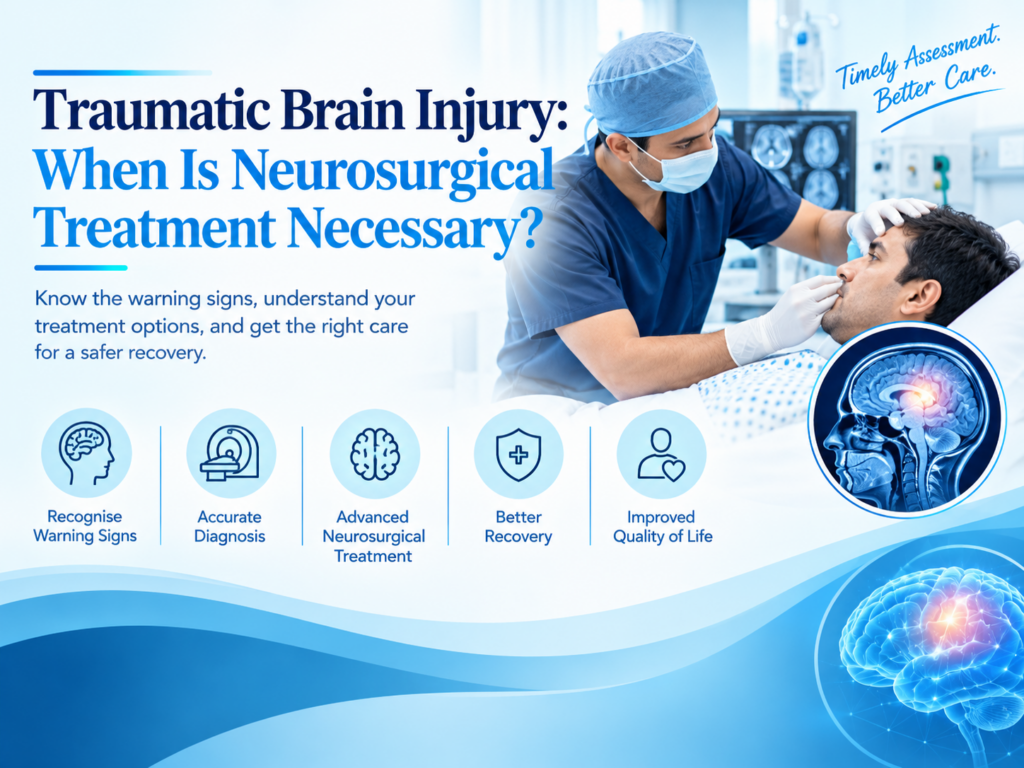
A traumatic brain injury (TBI) occurs when a sudden impact, blow, jolt, or penetrating injury affects the brain. It may happen during road accidents, falls, sports injuries, or other unexpected incidents. The effects can range from a mild concussion to serious damage involving bleeding, swelling, or pressure inside the skull.
Not every head injury requires surgery. However, some injuries need urgent assessment by a neurosurgeon to prevent further damage and protect vital brain functions. Recognising early warning signs and seeking timely medical care can help ensure appropriate treatment and improve recovery outcomes.
For patients seeking Traumatic brain surgery in Thane, timely evaluation is important when an injury causes concerning symptoms or scans reveal damage that may require surgical management.
Warning Symptoms That Require Urgent Medical Care
Following a head injury, symptoms may develop straight away or appear after a couple of hours. Seek emergency medical help if the injured person experiences any of the following:
- Loss of consciousness, even if brief
- A severe or worsening headache
- Repeated vomiting
- Seizures or convulsions
- Weakness, numbness, or difficulty moving a limb
- Slurred speech, problems with balance, or difficulty walking
- Unequal pupil size or increasing drowsiness
These symptoms may show bleeding, swelling, or other serious complications. Do not wait for symptoms to become extreme before seeking help. If a person becomes unconscious, has a seizure, or shows signs of neurological deterioration, emergency services should be contacted immediately.
How Do Doctors Identify a Traumatic Brain Injury?
Diagnosis usually begins with a medical examination and a review of how the injury happened. Doctors assess the person’s level of alertness, memory, pupil reactions, movement, muscle strength, and other signs of neurological function. They may also ask about existing health conditions and medicines, particularly those that affect blood clotting.
A CT scan is often performed when an urgent assessment is needed. It can help detect bleeding within the skull, fractures, and certain changes associated with brain swelling. In some situations, an MRI may be recommended to examine brain tissues in greater detail. The appropriate scan and further investigations depend on the symptoms, injury severity, and clinical findings.
The findings help the treating team decide whether observation, medication, intensive monitoring, or surgery is appropriate. Patients considering Traumatic brain surgery in Mulund should understand that the treatment decision depends on the injury’s severity, scan findings, symptoms, and overall health—not location alone.
When Is Neurosurgical Treatment Necessary?
Neurosurgical treatment may be needed when an injury creates a risk of pressure building inside the skull or causes structural damage that cannot be managed safely through observation alone. The decision is based on the patient’s clinical condition and imaging results.
Surgery may be considered in situations such as:
- Intracranial bleeding: A collection of blood may press against the brain and require surgical removal.
- Severe brain swelling: If pressure inside the skull becomes dangerously high, a procedure may be needed to relieve it.
- Depressed skull fractures: Certain fractures can damage underlying tissue or increase the risk of complications.
- Penetrating injuries: Some injuries involving foreign objects or damaged tissue require specialist surgical assessment.
- Worsening neurological condition: Declining consciousness or new neurological symptoms may indicate a problem requiring urgent intervention.
Not all these injuries require an operation. Some patients can be treated with close monitoring and supportive care, while others might need emergency surgery. The goal is to reduce pressure, control bleeding where possible, prevent secondary injury, and preserve brain function.
Brain Injury Treatment and the Recovery Process
The care required after a brain injury depends on its extremity and the type of damage involved. People with mild injuries may be advised to rest, monitor their symptoms, and gradually resume everyday activities according to their doctor’s instructions. Severe injuries may require hospitalisation, close monitoring, intensive care, medication, or a surgical procedure.
Following surgery, doctors regularly assess the patient’s neurological condition and check for possible complications. Some patients may benefit from rehabilitation, including physiotherapy to improve movement, occupational therapy for daily activities, speech therapy, or cognitive exercises to support memory and concentration.
The recovery period varies for each patient. Factors such as the severity of the injury, age, general health, and response to treatment can influence how quickly a person improves. Regular follow-up appointments help doctors monitor progress and adjust the care plan when necessary.
Patients requiring specialist evaluation can consult Dr. Nilesh Potdar, a neurosurgeon associated with Galaxy Super Speciality Hospital in Mulund and Mercurrey Hospital in Thane. The appropriate treatment approach is determined after reviewing the patient’s symptoms, examination findings, and investigation results. For more information, visit the traumatic brain surgery in Thane page.
Frequently Asked Questions
1. Is surgery necessary for all traumatic brain injuries?
No. Many head injuries can be treated with medical supervision, rest, and regular monitoring. Surgery may be required if the injury causes serious bleeding, increased pressure inside the skull, certain types of skull fractures, or a decline in neurological function.
2. When should a person seek medical assessment after a head injury?
Seek emergency care immediately if there is loss of consciousness, repeated vomiting, confusion, seizures, severe headache, weakness, or increasing drowsiness. Concerning symptoms should not be ignored.
3. What tests help determine whether surgery is needed?
A neurological examination and CT scan are commonly used. MRI or other investigations may be recommended depending on the suspected injury and the patient’s condition.
4. How long does recovery from traumatic brain injury take?
Recovery can range from days or weeks to several months or longer. It depends on injury severity, complications, and whether rehabilitation is required.
5. Can symptoms appear after the initial injury?
Yes. Some symptoms, including headache, confusion, vomiting, or drowsiness, may develop or worsen later. New or worsening symptoms after a head injury require prompt medical assessment.