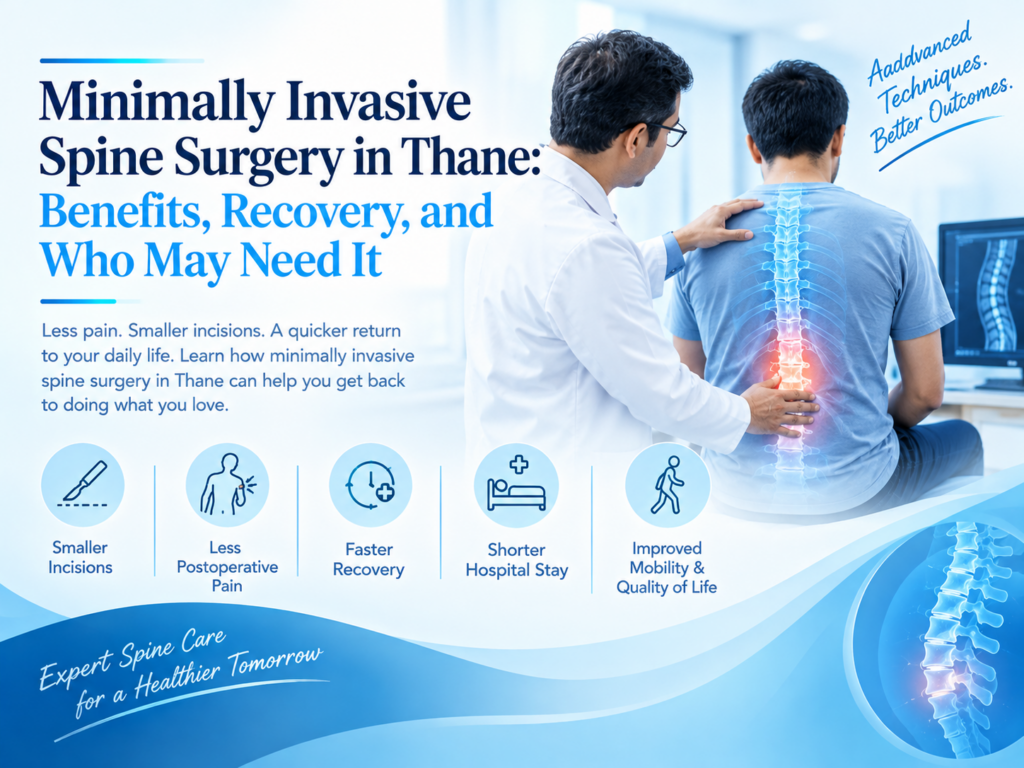
Persistent back pain, numbness, tingling, and difficulty moving can affect everyday activities. When medicines, physiotherapy, and other non-surgical treatments do not provide enough relief, a doctor may recommend surgery. Modern surgical techniques offer options that use smaller incisions and aim to limit damage to the muscles and tissues around the spine.
Dr. Nilesh Potdar, a neurosurgeon, provides spine surgery services at Galaxy Super Speciality Hospital in Mulund and Mercurrey Hospital in Thane. Patients considering Minimal Invasive Spine Surgery in Thane can learn about the procedure, its potential benefits, and the recovery process before making an informed treatment decision.
What Is Minimally Invasive Spine Surgery?
Minimally invasive spine surgery uses small incisions and specialised instruments to reach the affected area of the spine. Depending on the condition, the surgeon may use imaging guidance or an endoscope to see the surgical area and perform the required procedure.
Unlike traditional open surgery, this approach can decrease disruption to nearby muscles and soft tissues. However, the exact technique depends on the spinal problem, its severity, and the patient’s overall health.
The goal is to address the cause of symptoms, such as pressure on a nerve, while protecting surrounding structures as much as possible. Not every patient needs surgery, and the most suitable approach must be decided after a detailed medical assessment.
Which Conditions May Require This Procedure?
A neurosurgeon may consider minimally invasive techniques for selected spinal conditions, including:
- Herniated or slipped discs: A spinal disc may press against a nearby nerve, causing back pain, leg pain, tingling, or weakness.
- Spinal stenosis: Narrowing of the spinal canal can place pressure on nerves and affect walking or movement.
- Degenerative disc problems: Age-related changes in spinal discs may cause persistent pain and reduced mobility.
- Selected nerve compression conditions: Surgery may help relieve pressure when symptoms continue despite appropriate non-surgical care.
The treatment plan depends on examination findings and investigations such as MRI or CT scans. Patients with complex spinal injuries or severe structural problems may require a different surgical approach.
What Are the Advantages of Minimally Invasive Spine Surgery?
One reason patients ask about Minimal Invasive Spine Surgery in Mulund is the possibility of a less disruptive surgical experience. When appropriate for the condition, potential benefits include:
Smaller Incisions
The surgeon uses smaller cuts than those generally required for open surgery. This can end with smaller scars and less disturbance to surrounding tissues.
Reduced Postoperative Discomfort
Limited muscle disruption may reduce pain after surgery for some patients. Pain levels still vary according to the procedure, the condition being treated, and individual healing.
Potentially Faster Recovery
Some patients may resume light activities sooner than they would after a comparable open procedure. Recovery time depends on the operation, overall health, and the body’s response to treatment.
Shorter Hospital Stay
Selected procedures may allow patients to leave the hospital sooner. The decision depends on recovery progress, pain control, mobility, and the surgeon’s advice.
These benefits are not guaranteed. Minimally invasive techniques also have disadvantages, and open surgery may be more suitable for certain complex conditions.
How Should Patients Prepare for Surgery?
Preparation begins with a consultation and a review of the patient’s medical history, symptoms, previous treatments, and diagnostic scans. Dr. Nilesh Potdar can assess the findings and explain the available treatment options, expected benefits, possible risks, and recovery requirements.
Patients should share information about medicines, allergies, existing health conditions, and previous surgeries. They should also follow instructions about fasting, medication adjustments, and arrangements for returning home after the procedure.
For people with injuries involving the spine, the appropriate treatment depends on the type and severity of the damage. Information about traumatic spine surgery in Thane can help patients understand how spinal injuries may require a different treatment plan.
What Can You Expect During Recovery?
Recovery varies from one patient to another. The medical team will provide instructions about wound care, movement, pain management, and follow-up visits. Some patients may begin walking soon after surgery, while others need more time and assistance.
Physiotherapy and prescribed exercises may support mobility and strength when the surgeon considers them appropriate. Patients should avoid heavy lifting, sudden twisting, and strenuous activities until they receive medical clearance.
Report worsening pain, new weakness, fever, wound problems, or changes in bladder or bowel control promptly. Sudden or extreme neurological symptoms require urgent medical assessment.
Frequently Asked Questions
1. Who can benefit from minimally invasive spine surgery?
This procedure is not appropriate for every patient. The decision depends on the type of spinal problem, its severity, the patient’s overall health, and whether other treatments have helped. A spine specialist can assess the condition and recommend a suitable approach.
2. What level of discomfort can I expect after minimally invasive spine surgery?
Some soreness or discomfort may occur during recovery. Compared with certain open procedures, minimally invasive techniques may result in less pain after surgery. However, recovery experiences differ from person to person.
3. When can I return to my normal routine after surgery?
The recovery period varies according to the procedure performed and the patient’s health. Your surgeon will guide you on when it is appropriate to resume work, exercise, driving, and other daily activities.
4. What are the possible advantages of minimally invasive spine surgery over open surgery?
For suitable patients, this approach may involve smaller incisions and less disruption to surrounding tissues. However, every surgical procedure carries potential risks, and the best option depends on the individual’s spinal condition.
5. Where can I consult Dr. Nilesh Potdar for minimally invasive spine surgery?
Consultations are available with Dr. Nilesh Potdar at Mercurrey Hospital in Thane and Galaxy Super Speciality Hospital in Mulund. Patients can schedule an appointment to discuss their symptoms, understand the available treatments, and determine the next steps for their care.