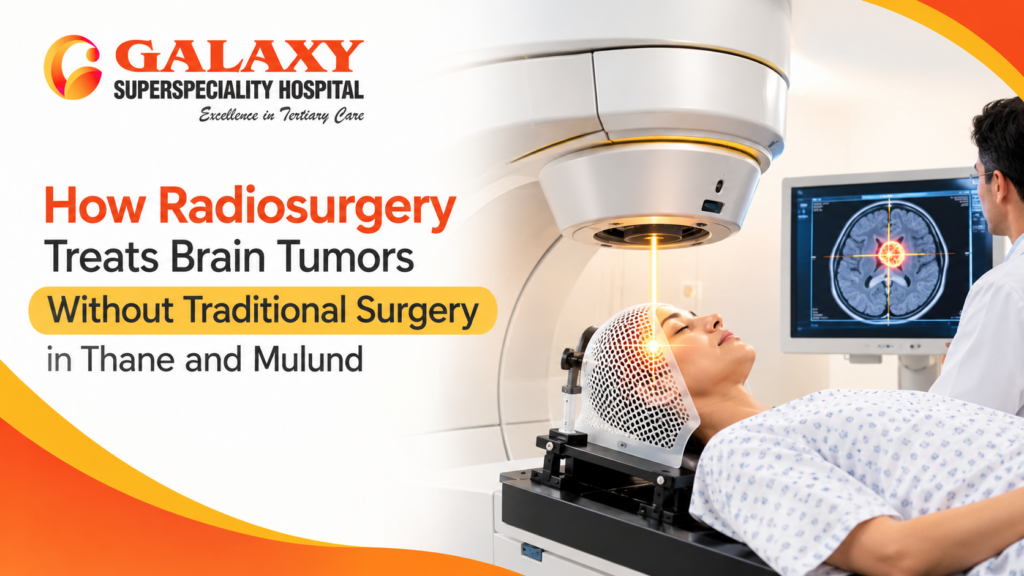
A brain tumor diagnosis can naturally raise questions about treatment, recovery, and whether traditional surgery will be necessary. Advances in modern neurosurgical care have introduced focused treatment options for selected patients. Radiosurgery in Thane is one such approach that uses precisely directed radiation to target certain brain tumors without making a conventional surgical incision.
For patients exploring treatment options, understanding how radiosurgery works can help them have a more informed discussion with their neurosurgeon. Depending on the tumor’s type, size, location, and other medical factors, Radiosurgery in Mulund may also be considered as part of an individualised treatment plan.
What Is Radiosurgery?
Despite its name, radiosurgery does not involve a traditional surgical cut. Instead, it uses highly focused radiation beams that are directed toward a specific target while limiting exposure to surrounding healthy tissue.
Radiosurgery in Thane may be recommended for certain small or well-defined brain tumors and other neurological conditions. The exact suitability depends on detailed imaging and an assessment by a qualified specialist.
How Does Radiosurgery Treat a Brain Tumor?
During radiosurgery, advanced imaging helps identify the precise location and shape of the tumor. The treatment system then delivers carefully planned radiation to the target.
The radiation damages tumor cells and interferes with their ability to grow. The process does not physically remove the tumor in the same way as conventional surgery. Instead, treatment aims to control or destroy abnormal tissue over time.
For suitable cases, Radiosurgery in Mulund can provide a focused treatment option while avoiding the incision associated with conventional brain surgery.
When Can Radiosurgery Be Considered?
Not every brain tumor is suitable for radiosurgery. Doctors generally consider several factors before recommending it, including:
- Tumor type and diagnosis
- Tumor size
- Location within the brain
- Number of tumors
- Previous treatments
- Overall health of the patient
- Relationship of the tumor to important brain structures
In some cases, Brain tumor surgery in Thane may be more appropriate, particularly when a tumor is large, causing significant pressure, or requires tissue removal for diagnosis.
Radiosurgery vs Traditional Brain Surgery
Traditional surgery involves creating an opening to access and remove or manage a tumor. It may be necessary for tumors that require decompression, tissue sampling, or physical removal.
In comparison, Radiosurgery in Thane is incision-free and designed to deliver radiation with high precision. Depending on the case, it may be used as the primary treatment, an alternative to surgery, or as part of a broader treatment strategy.
The decision between radiosurgery and Brain tumor surgery in Thane should always be based on individual medical evaluation rather than the preference for one technique alone.
What Are the Potential Benefits?
For appropriately selected patients, Radiosurgery in Mulund may offer several practical advantages:
- No conventional surgical incision
- Focused radiation delivery
- Treatment of selected tumors located in difficult-to-access areas
- Generally shorter treatment sessions than some conventional procedures
- Potentially less disruption to surrounding tissue
- Often performed without a prolonged hospital stay
However, the benefits and expected results vary from one patient to another.
What Happens After Radiosurgery?
Patients may be monitored for a period following treatment, depending on the technique used and their individual condition. Follow-up imaging is important because doctors need to evaluate how the tumor responds over time.
Unlike conventional surgery, where a tumor may be removed immediately, the effects of radiosurgery can develop gradually. Therefore, regular follow-up is an important part of care.
A specialist may recommend Brain tumor surgery in Thane instead if follow-up findings indicate that additional intervention is required.
Is Radiosurgery Suitable for Everyone?
No. Radiosurgery in Thane is appropriate only for selected conditions and patients. A comprehensive evaluation, including neurological assessment and appropriate imaging, is necessary before treatment.
Patients seeking Radiosurgery in Mulund should discuss their diagnosis, available treatment options, possible benefits, and potential risks with an experienced neurosurgical team.
Dr. Nilesh Potdar provides specialized neurosurgical care and evaluates patients based on their individual neurological condition and treatment requirements.
Understanding Your Treatment Options
Modern brain tumor care is not limited to a single treatment approach. Depending on the diagnosis, patients may have options that include observation, medication, conventional surgery, radiation-based treatment, or a combination of therapies.
For suitable patients, Radiosurgery in Mulund can be an important part of modern brain tumor management. At the same time, Brain tumor surgery in Thane remains an important option when physical tumor removal or tissue diagnosis is required.
The choice should be made after reviewing medical history, imaging findings, tumor characteristics, and overall health. An individualized approach can help ensure that treatment is selected according to the patient’s specific needs.
Frequently Asked Questions
1. Does radiosurgery involve cutting the skull?
No. Radiosurgery is designed to deliver focused radiation without the conventional incision used in open brain surgery.
2. Can every brain tumor be treated with radiosurgery?
No. Suitability depends on factors such as tumor type, size, location, and the patient’s overall condition.
3. Is radiosurgery painful?
The treatment itself is generally designed to be minimally invasive, but the experience can vary depending on the technique and individual circumstances.
4. How is the success of radiosurgery monitored?
Doctors typically use follow-up consultations and imaging studies to assess the tumor’s response over time.
5. Is radiosurgery always better than traditional surgery?
Not necessarily. Each treatment has specific indications. The appropriate option depends on the individual tumor and clinical situation.
Final Thought
Radiosurgery has expanded the treatment options available for selected brain tumors, offering a precise approach without the need for traditional surgical incisions. The right treatment depends on the tumor’s type, size, location, and the patient’s overall health. Dr. Nilesh Potdar can help patients understand their treatment options and determine an appropriate approach based on their individual condition and medical needs.