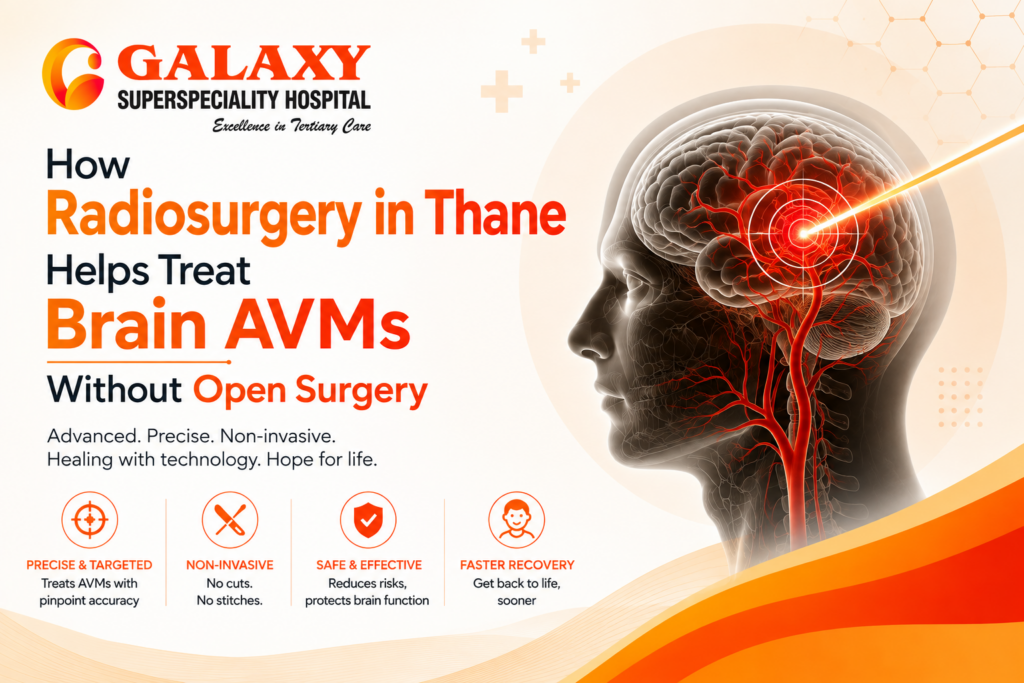
Brain health plays a vital role in overall well-being, and conditions affecting the brain require timely diagnosis and expert treatment. One such condition is an Arteriovenous Malformation (AVM), an abnormal connection between arteries and veins that disrupts normal blood flow. If left untreated, a brain AVM can increase the risk of bleeding, seizures, headaches, and other neurological complications.
Fortunately, advancements in medical technology have made it possible to treat many brain AVMs without traditional open brain surgery. Radiosurgery in Thane is one of the most effective minimally invasive treatment options for selected patients. With advanced Gamma Knife technology and expert evaluation by Dr. Nilesh Potdar, patients can receive precise treatment while avoiding the risks associated with conventional surgery.
What Is a Brain AVM?
A brain Arteriovenous Malformation (AVM) is a tangle of abnormal blood vessels where arteries connect directly to veins without the normal network of capillaries. This abnormal connection places extra pressure on blood vessels, increasing the risk of rupture and bleeding.
Many people may not notice symptoms until the AVM causes complications, making early diagnosis extremely important.
Common Symptoms of Brain AVMs
The symptoms vary depending on the size and location of the AVM. Common signs include:
- Persistent or severe headaches
- Seizures
- Weakness or numbness in the limbs
- Difficulty speaking
- Vision changes
- Dizziness or balance problems
- Sudden bleeding in the brain
Anyone experiencing these symptoms should consult a neurospecialist for timely evaluation.
Why Early Diagnosis Matters
Early diagnosis helps prevent serious complications such as brain hemorrhage and permanent neurological damage. Modern imaging techniques like MRI, CT scans, and cerebral angiography allow specialists to accurately identify the size, location, and complexity of an AVM.
Once diagnosed, the treatment plan depends on factors such as the patient’s age, symptoms, and the AVM’s position within the brain.
How Radiosurgery Works
Unlike traditional surgery, radiosurgery does not involve surgical cuts or stitches. Instead, highly focused radiation beams target the abnormal blood vessels with exceptional precision.
Over time, the radiation causes the AVM vessels to gradually close, reducing blood flow and lowering the risk of future bleeding while protecting nearby healthy brain tissue.
This advanced form of Stereotactic Radiosurgery is especially beneficial for AVMs located in deep or sensitive areas of the brain where conventional surgery may carry greater risks.
Benefits of Radiosurgery for Brain AVMs
Patients who are suitable candidates can experience several advantages, including:
- No open brain surgery
- No surgical incision
- Minimal discomfort
- Lower risk of infection
- Faster recovery
- Shorter hospital stay
- High precision targeting
- Preservation of surrounding healthy brain tissue
These benefits make Radiosurgery in Thane an excellent option for many patients diagnosed with brain AVMs.
Who Is an Ideal Candidate?
Not every AVM requires the same treatment. Radiosurgery may be recommended for patients who have:
- Small to medium-sized brain AVMs
- AVMs located deep inside the brain
- High surgical risk due to AVM location
- Residual AVMs after previous treatment
- Medical conditions that make open surgery less suitable
An experienced neurosurgeon carefully evaluates each patient before recommending the most appropriate treatment.
Why Gamma Knife Radiosurgery Is Different
Gamma Knife technology delivers hundreds of precisely focused radiation beams to a single target without affecting most surrounding tissue.
The Best Gamma Knife radiosurgery in Thane offers several important advantages:
- Exceptional treatment accuracy
- Non-invasive procedure
- Minimal interruption to daily life
- Reduced complications
- Proven long-term effectiveness for selected AVMs
Because of its precision, Gamma Knife treatment has become one of the preferred options for carefully selected brain AVM patients.
What Happens During the Procedure?
The treatment process is straightforward and usually completed within a day.
Before Treatment
- Medical evaluation
- MRI or CT imaging
- Treatment planning
- Frame or mask placement for accurate positioning
During Treatment
- The patient lies comfortably on the treatment table.
- Advanced software guides the radiation beams precisely to the AVM.
- No surgical incision is made.
- The procedure is painless.
After Treatment
Most patients return home the same day. Regular follow-up imaging helps monitor the gradual closure of the abnormal blood vessels over the following months or years.
Recovery After Radiosurgery
Recovery is generally much quicker compared to traditional brain surgery. Most patients resume routine activities within a short period, depending on their overall condition and their doctor’s advice.
Regular follow-up appointments are important because the AVM gradually closes over time rather than disappearing immediately.
Why Choose Dr. Nilesh Potdar?
When dealing with complex brain conditions, choosing an experienced neurosurgeon is essential. Dr. Nilesh Potdar specializes in advanced brain and spine treatments with a patient-focused approach.
Patients benefit from:
- Comprehensive neurological evaluation
- Advanced diagnostic planning
- Personalised treatment recommendations
- Modern Gamma Knife technology
- Long-term follow-up care
Whether a patient requires Radiosurgery in Mulund or consultation for advanced brain AVM management, individualized treatment planning helps achieve the best possible outcomes.
Tips for Patients Diagnosed with a Brain AVM
- Do not ignore persistent neurological symptoms.
- Follow your imaging schedule regularly.
- Discuss all available treatment options with your neurosurgeon.
- Take prescribed medications as advised.
- Attend every follow-up appointment after treatment.
- Maintain a healthy lifestyle to support overall recovery.
Final Thoughts
Brain AVMs can be serious, but modern medical technology has transformed the way they are treated. For many patients, Radiosurgery provides a safe, highly precise, and minimally invasive alternative to open brain surgery. With advanced Brain AVM Treatment in Thane techniques such as Stereotactic Radiosurgery, patients can receive effective care while minimising recovery time and surgical risks.
If you or a loved one has been diagnosed with a brain AVM, consulting an experienced specialist like Dr. Nilesh Potdar can help determine whether radiosurgery is the right treatment option. Early diagnosis and expert care play a vital role in achieving the best possible long-term results.
Frequently Asked Questions (FAQs)
1. What is a brain AVM?
A brain AVM is an abnormal connection between arteries and veins that disrupts normal blood flow and may increase the risk of bleeding.
2. Is radiosurgery painful?
No. Radiosurgery is a non-invasive procedure that does not involve surgical cuts and is generally painless.
3. How long does Gamma Knife treatment take?
Most procedures are completed within a few hours, and many patients return home the same day.
4. Is Gamma Knife better than open surgery?
For selected patients with suitable AVMs, Gamma Knife radiosurgery offers a safe, minimally invasive alternative with fewer risks and faster recovery.
5. How long does it take for an AVM to disappear after radiosurgery?
The treated blood vessels usually close gradually over months or a few years, depending on the size and location of the AVM.